Ceiling fan installation: what it costs and what to check first
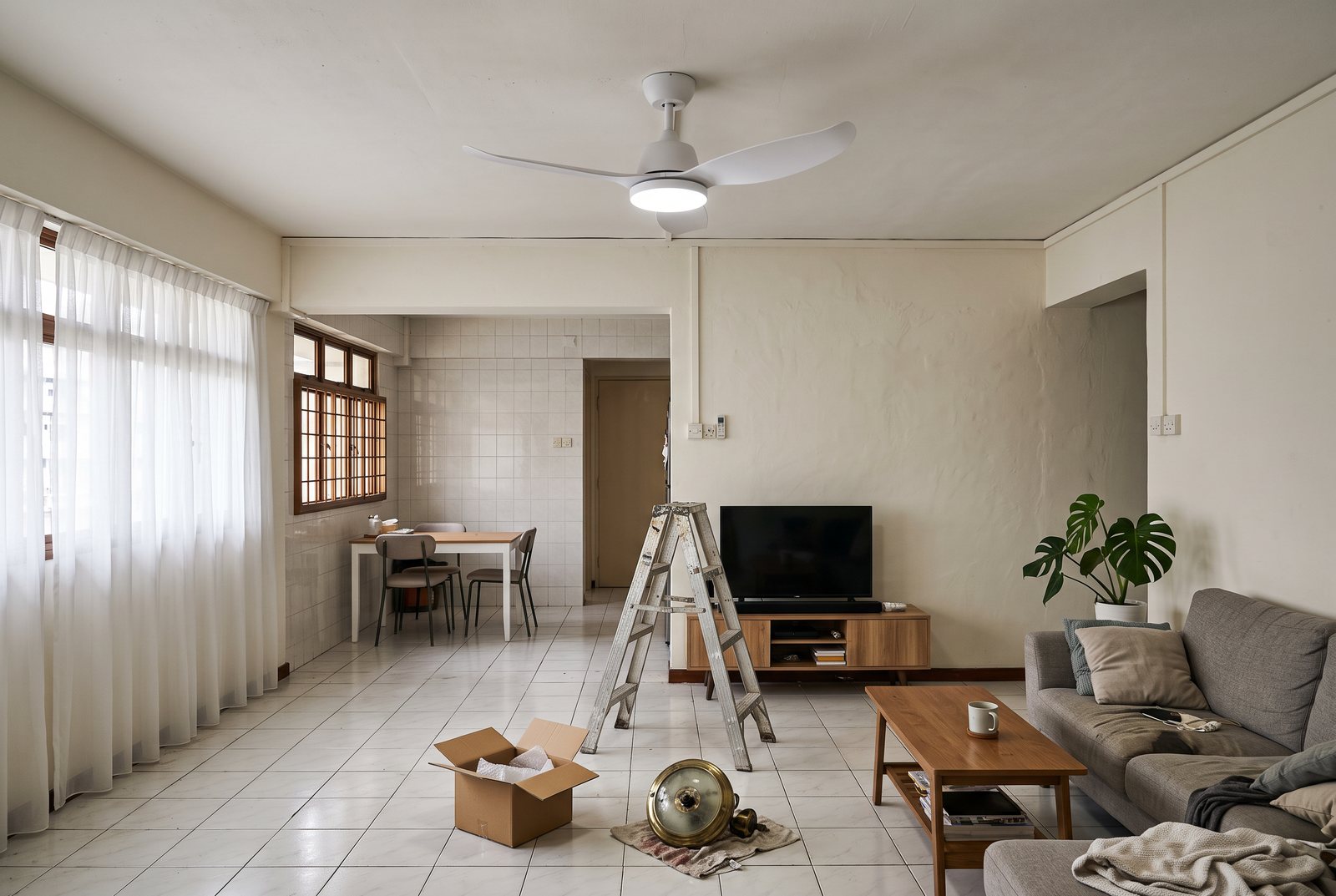
Putting up a ceiling fan is usually a single visit, and the price depends less on the fan than on what is already in your ceiling. If there is a working point in the right place and the ceiling is solid concrete, it is a straightforward install. If the fan has to go where there is no point, or under a false ceiling, there is more work. On a recent RK E&C quote in Bidadari, removing an old light and installing a new light and a ceiling fan the owner had bought, including wiring one new point, came to $270.
What a fan installation costs
| Job | Price (SGD) | Source |
|---|---|---|
| Remove 1 light, install 1 new light and 1 ceiling fan (both owner-supplied), wiring for 1 new point | $270 | RK E&C quote, Bidadari, October 2026 |
| Add a power point | $80 – $150 each | See HDB electrical works |
Most fan jobs we see are like the Bidadari one: the owner has already bought the fan, and the work is taking down what is there, fixing the fan securely, connecting it, and testing the speeds and the light. The price moves with the factors below.
What changes the price
- An existing fan point, or a new one. A fan going onto a point that is already in the right spot is the simple case. A new position means running new wiring, which is where most of the cost difference sits.
- Replacing a light with a fan. Common in bedrooms. The light point may be usable, but it has to be in a spot where the blades clear walls, wardrobes and the bed head, and the fixing above it has to carry a fan rather than a light.
- The ceiling itself. Concrete slab is the easy case. Under a false ceiling, the fan has to hang from the slab above, not from the board, which can mean opening the ceiling and making good afterwards. See false ceilings and cove lighting.
- Removing the old fan or light. Usually included, as it was in the Bidadari quote, but say so when you ask for a price.
- Several fans at once. Doing every room in one visit is cheaper per fan than separate trips.
Wiring and safety
Hanging and connecting a fan to an existing point is routine. Anything that changes the wiring, such as a new point, moving a point, or adding a separate switch or regulator, should be done by a licensed electrician, and the circuit isolated first. A fan also needs to be fixed to the structure with a proper hook or bracket rated for its weight; the two small screws that held a ceiling light are not enough for a fan that spins and wobbles.
If the house is old and the wiring is tired, a fan is a good moment to check it. Our HDB rewiring guide covers when that is worth doing.
Choosing the fan
- DC or AC motor. DC fans are generally quieter and use less power, and usually come with a remote. AC fans are cheaper to buy and often run from a wall regulator.
- Size for the room. A small blade span in a large living room moves too little air; a large fan in a small bedroom is noisy and crowds the space. The maker's guide for room size is worth following.
- Ceiling height. On lower ceilings, a close-mount (“hugger”) fan keeps the blades at a safe height. Ask before you buy if you are unsure.
- With or without a light. If the fan replaces your only ceiling light, choose one with a light kit, or plan for other lighting in the room.
Frequently asked questions
How much does it cost to install a ceiling fan in Singapore?
It depends mainly on whether there is a usable point and what your ceiling is made of. On a recent RK E&C quote, removing an old light and installing a new light and an owner-supplied ceiling fan, including wiring one new point, came to $270. Adding a power point on its own is typically $80 to $150.
Can I put a ceiling fan where my light is?
Often, if the point is somewhere the blades will clear walls, furniture and the bed head, and the fixing above it can be replaced with one that carries a fan's weight. A light's fixing is not designed for a spinning fan.
Do I need an electrician to install a ceiling fan?
Any new point or change to the wiring should be done by a licensed electrician with the circuit isolated. Fixing and connecting a fan to an existing, suitable point is a routine job for an experienced installer.
Can a ceiling fan be installed on a false ceiling?
Yes, but it must hang from the concrete slab above, not from the ceiling board. That can mean opening part of the false ceiling for access and making it good afterwards.
Is a DC or AC ceiling fan better?
DC fans are generally quieter and more efficient and usually come with a remote; AC fans cost less to buy. For bedrooms where a fan runs all night, many owners choose DC.
Getting it done by RK E&C
RK E&C is a Singapore-registered renovation and handyman company (UEN 202442767D). We install fans and lights you have bought, run new points where needed, and fix to the slab properly. Because a fan is a short job, most customers add it to other work in the same visit: other electrical points, painting or handyman jobs.
Send a photo of the ceiling where the fan should go, and of the fan's box, through our contact form or WhatsApp.
Need a ceiling fan put up?
Send a photo of the ceiling and the fan you bought. We will tell you whether the point and fixing will do, and quote the install.
The $270 figure is from an actual RK E&C quote in Bidadari dated October 2026, for removing one light, installing one new light and one ceiling fan supplied by the owner, and wiring one new point. The power point range is from our HDB electrical works guide. None of this is a quotation.