HDB bathroom waterproofing: signs you need it, cost & when to redo
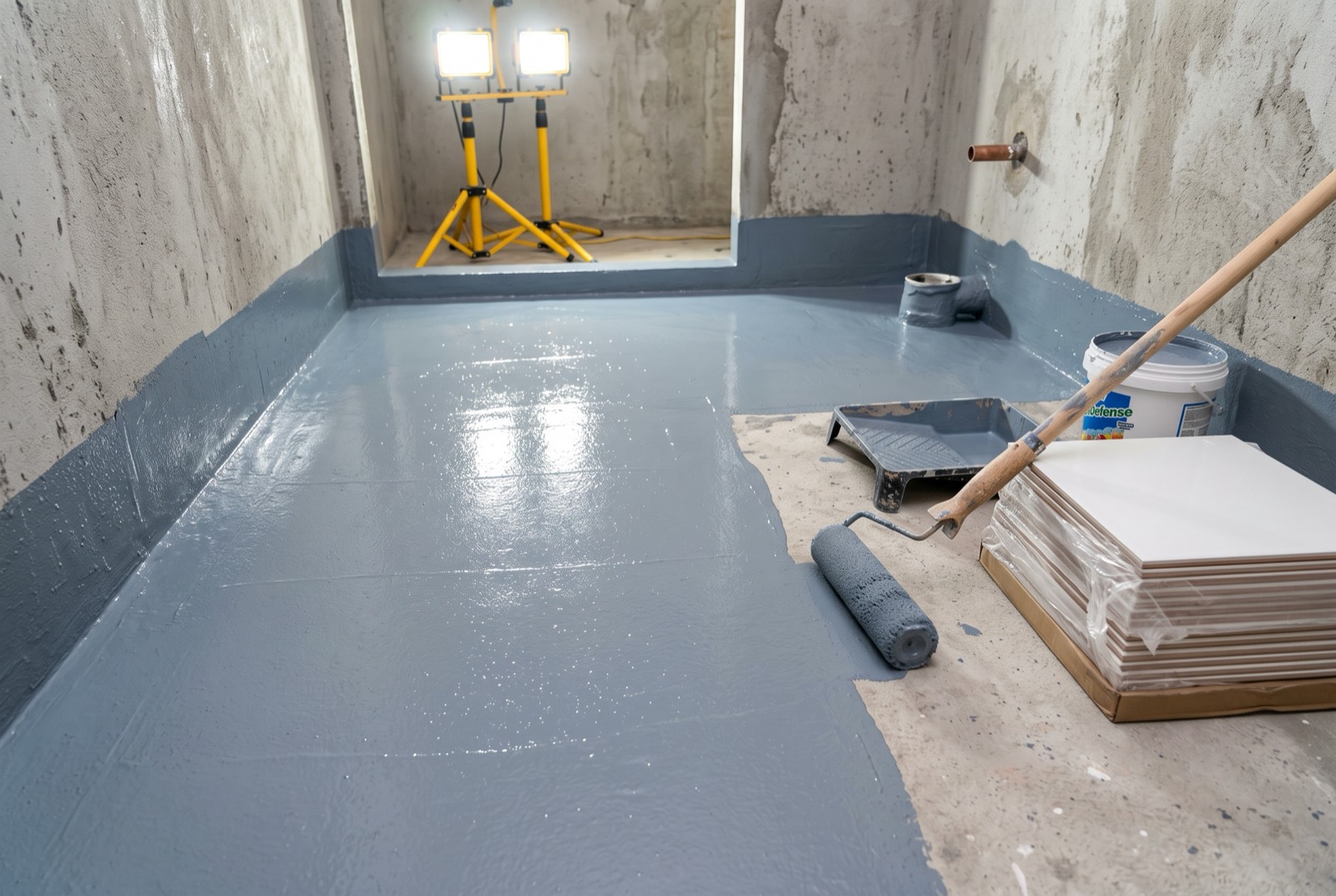
If your HDB bathroom wall has damp patches, the paint is bubbling, there's a musty smell that won't clear, or the ceiling of the unit below is staining. Your HDB bathroom waterproofing has likely failed and needs attention. Bathroom waterproofing in Singapore is the hidden membrane layer under your tiles and screed that stops water from soaking into the concrete slab and seeping to the floor below. When it goes, the fix ranges from a liquid overlay to a full hack-and-redo. This guide covers the warning signs, membrane versus PU, hacking versus overlay, the inter-floor ceiling-leak process, indicative cost and how long a proper job lasts.
Signs your HDB bathroom waterproofing has failed
Waterproofing fails quietly. By the time you notice, water has usually been tracking through the screed for a while. Watch for these signs, the more boxes you tick, the more urgent it is.
| Sign | What it usually means | Urgency |
|---|---|---|
| Damp patches / stains on bathroom wall | Water wicking through grout or screed | Monitor / inspect |
| Stain on ceiling of unit below | Membrane breached; water reaching the slab | Act soon |
| Bubbling or flaking paint near bathroom | Trapped moisture behind the wall | Inspect |
| Persistent musty smell | Constant moisture, possible mould | Inspect |
| White powdery deposits (efflorescence) | Water carrying salts out of the screed | Act soon |
| Hollow-sounding or loose tiles | Screed below is wet and de-bonding | Act soon |
A stain on the ceiling below is the clearest red flag. By then water has gone all the way through the floor, and the longer it runs the more it damages the slab and the neighbour's ceiling.
Inter-floor ceiling leaks: when it's coming from the unit above (or going down)
This is the situation most HDB owners worry about, a wet patch on the bathroom or bedroom ceiling, usually right under the unit above's bathroom. In most cases the source is the waterproofing or pipework in the flat above yours.
The practical steps:
- Talk to the unit above first. The leak source and the repair are usually on their side, so the conversation starts there.
- If you can't agree, HDB and the Town Council run a process to help mediate and assess inter-floor leaks between neighbours. Check the current procedure on the HDB website before assuming who pays.
- Document everything. Photos, dates, and any correspondence, in case the matter goes through the formal process.
If the leak is going downward from your own bathroom, the fix is on your side: it almost always points back to failed floor waterproofing, and the durable solution is to redo it properly rather than just repaint the neighbour's ceiling.
Membrane vs PU: what actually goes under your tiles
"Waterproofing" is not one product. The two you'll hear about most are cementitious membrane and polyurethane (PU), and they do different jobs.
Cementitious membrane
- A rigid, cement-based coating bonded directly to the screed.
- The standard base layer applied before tiling in a full renovation.
- Strong and durable, but less forgiving of structural movement and hairline cracks.
Polyurethane (PU)
- A flexible liquid coating that cures into a seamless rubbery layer.
- Bridges hairline cracks and tolerates movement better than cementitious.
- Can be applied as an overlay in some cases, which makes it useful for repairs without full hacking.
In practice a good system often uses both: a cementitious base for adhesion and strength, with PU where flexibility matters: around the floor trap, wall-floor junctions and pipe penetrations, which are the spots that fail first.
Hacking vs overlay: which repair do you need?
This is the question that decides the cost. There are two broad routes.
Overlay (no hacking)
A PU or liquid membrane is applied over the existing surface. It's faster, cheaper and far less disruptive, no debris, no re-tiling. It works when the screed underneath is still sound and the failure is localised. The trade-off is that you're sealing on top of an old system, so it suits early or minor leaks rather than a bathroom that's already saturated.
Hack and redo
Tiles and old screed are hacked down to the slab, a fresh waterproofing membrane is laid, a ponding test confirms it holds, then new screed and tiles go on top. It's the gold-standard fix and the one to choose when the leak is widespread, tiles are hollow, or the screed is waterlogged. It costs more and takes longer, but it resets the whole system.
If you're hacking anyway, this often gets bundled into a wider HDB renovation so the bathroom is only torn up once.
Why surface prep makes or breaks the job
The most common reason waterproofing fails early isn't the product. It's the prep. A membrane is only as good as the surface it bonds to. Before any coating goes down, the substrate should be:
- Clean and dust-free, so the membrane actually adheres instead of peeling.
- Sound and crack-repaired, because a coating won't bridge a moving crack on its own.
- Coated in full, correct layers. The right number of coats, taken up the walls and into the floor trap, not just painted across the floor.
- Ponding-tested. The area is flooded and left for hours to confirm it holds water before tiling seals it away.
Singapore's BCA publishes good-practice standards for waterproofing of wet areas. A rushed single coat with no ponding test is the classic shortcut that leaks within a year or two.
How much does it cost to redo HDB bathroom waterproofing?
Cost depends almost entirely on whether you overlay or hack, plus the bathroom size and tile choice. The ranges below are indicative of the Singapore market in 2026. Treat them as a guide and confirm a fixed quote after a site inspection.
| Scope of work | Indicative price (SGD) | Notes |
|---|---|---|
| PU overlay, small / localised area | From a few hundred dollars | No hacking; suits minor leaks |
| PU overlay, full bathroom floor | $600 – $1,500 | Existing screed must be sound |
| Hacking + fresh screed + membrane | $1,500 – $3,000 | Down to slab, ponding-tested |
| Full hack & redo incl. re-tiling | $2,000 – $4,500+ | Varies with size & tile choice |
Re-tiling is usually the swing factor, premium tiles and intricate layouts add to both materials and labour. A small standard HDB bathroom sits at the lower end; a larger master bath with feature tiles at the upper end.
How long does waterproofing last?
Done properly, a waterproofing system should last 10 to 15 years or more, often the life of the renovation itself. What shortens it is almost always the workmanship: skipped prep, too few coats, no coverage up the walls, or no ponding test. When you hear of a bathroom leaking after a year or two, it's rarely the membrane brand and almost always how it was applied.
Getting it done by RK E&C
RK E&C is a Singapore-registered renovation and waterproofing company (UEN 202442767D) that handles HDB bathroom waterproofing island-wide, from a targeted PU overlay to a full hack-and-redo with ponding test and re-tiling, on its own or as part of a wider renovation. We inspect first, tell you honestly whether an overlay will do or hacking is the safer call, and give a fixed price before any work starts. If the issue is a dripping fitting rather than the floor, see our guide on leaking taps in HDB flats.
Send a photo of the affected area and your postal code and we'll come take a look.
Damp patch or leaking ceiling?
Send us photos and your postal code. We'll inspect, advise overlay vs hacking, and give a fixed-price quote, island-wide.
Prices are indicative of the Singapore market in 2026 and not a quotation. Confirm a fixed price with your provider after a site inspection.