HDB renovation cost in Singapore: a realistic 2026 breakdown
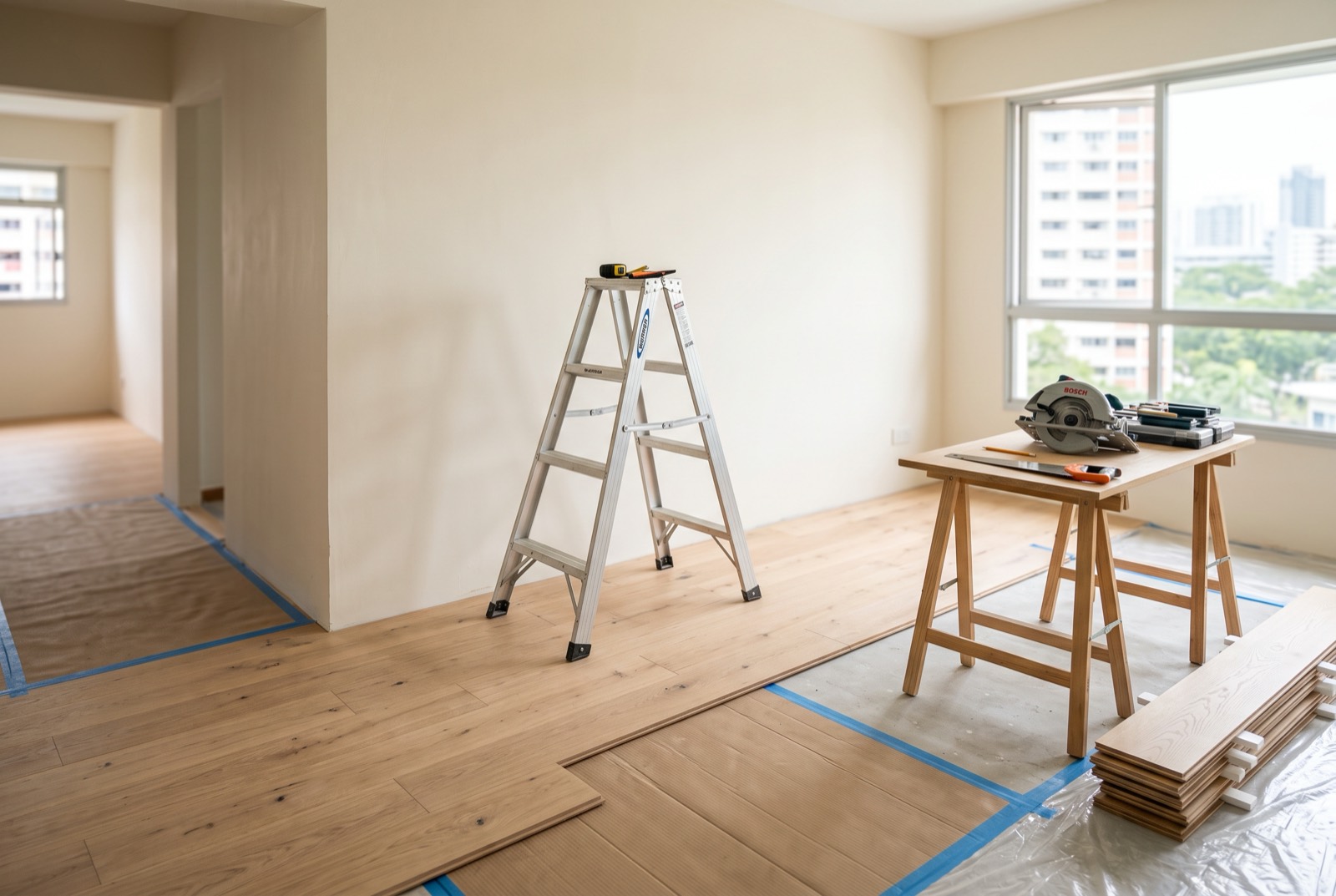
Wondering what an HDB renovation cost actually looks like in 2026? As a realistic guide for Singapore flats, a light refresh of a 3-room can start from around $15,000–$25,000, a typical 4-room runs roughly $30,000–$55,000, and a fuller 5-room job often lands between $45,000 and $80,000 or more. The spread is wide because two flats of the same size can differ by tens of thousands depending on carpentry, finishes and whether it's a BTO or resale unit. This guide breaks the cost down item by item, shows where homeowners overspend, and explains how to get a fixed-price quote you can trust.
What drives HDB renovation cost in Singapore
There is no single "HDB renovation price" because a renovation is really a stack of separate trades, each with its own range. Four things move the number more than anything else:
- How much carpentry you commission. Built-in wardrobes, kitchen cabinets and feature walls are usually the biggest cost, and the easiest to over-order.
- BTO versus resale. A resale flat may need hacking, rewiring and re-waterproofing before any new finishes go in.
- The finishes you choose. The same cabinet can cost very differently in laminate versus sintered stone, with or without soft-close.
- Flat size and scope. More rooms, more bathrooms and a full layout change all push the figure up.
Everything below is indicative of the Singapore market in 2026. Treat the ranges as a planning tool, not a quotation. Always confirm a fixed price for your own flat.
HDB renovation cost breakdown by item
This is where the budget is actually spent. The table shows typical price ranges by trade for 3-room, 4-room and 5-room flats. Ranges assume standard-to-mid finishes; premium materials sit at or above the top of each band.
| Item / trade | 3-room (SGD) | 4-room (SGD) | 5-room (SGD) |
|---|---|---|---|
| Flooring (overlay or vinyl / tiles) | $2,500 – $5,000 | $3,500 – $7,000 | $4,500 – $9,000 |
| Painting (whole flat) | $1,200 – $2,200 | $1,800 – $3,000 | $2,200 – $3,800 |
| Waterproofing (bathrooms) | $1,000 – $2,500 | $1,500 – $3,500 | $2,000 – $4,500 |
| Hacking & demolition | $1,500 – $4,000 | $2,500 – $6,000 | $3,500 – $8,000 |
| Plumbing works | $800 – $2,500 | $1,200 – $3,500 | $1,500 – $4,500 |
| Electrical & wiring | $1,500 – $3,500 | $2,500 – $5,000 | $3,000 – $6,500 |
| Carpentry (wardrobes, kitchen, built-ins) | $8,000 – $16,000 | $12,000 – $25,000 | $15,000 – $32,000+ |
| False ceiling & lighting trays | $1,500 – $3,500 | $2,500 – $5,500 | $3,000 – $7,000 |
Add these up and you can see why carpentry alone often makes up 40 to 60 percent of the total. It's also why two homeowners with the same flat can pay wildly different amounts, one keeps the layout and orders modest cabinetry, the other hacks walls and commissions full-height built-ins in every room.
BTO vs resale: why the same flat costs differently
The single biggest swing in HDB renovation cost is whether you're starting from a brand-new BTO or an older resale flat.
BTO flats
A new BTO already has floors, internal doors and basic sanitary fittings. You can usually skip hacking and re-waterproofing entirely and put your budget into carpentry, painting, lighting and a few feature touches. That's why a BTO often comes in at the lower end of its size band.
Resale flats
An older resale unit frequently needs work before any new finishes go in: removing old flooring, re-skimming tired walls, updating ageing wiring, and re-doing bathroom waterproofing that has reached the end of its life. Hacking to open up a dated layout adds more again. Those preparatory trades can add several thousand dollars before you've chosen a single cabinet. See our guide on HDB hacking and demolition rules for what's allowed and what it costs.
Where homeowners overspend
Most blown budgets aren't caused by one big shock. They're the result of small decisions stacking up after the contract is signed. The usual culprits:
- Scope creep. Adding "just one more" cabinet, a feature wall or extra lighting mid-job. Variation works are almost always priced higher than if they'd been in the original quote.
- Over-carpentry. Full-height built-ins in every room look impressive but lock up a large share of the budget. Free-standing furniture you can buy later is far cheaper.
- Premium finishes where they don't show. Sintered stone on a hidden surface, designer tiles behind a fridge, paying top dollar where no one will notice.
- No contingency. Resale flats in particular throw up surprises once walls and floors are opened. Without a buffer, every surprise becomes a stressful overrun.
- Lump-sum quotes. A single headline figure with no breakdown makes it impossible to see what you're paying for or to trim sensibly.
A simple discipline helps: lock your layout and material choices before work starts, and hold a 10–15 percent contingency you don't touch unless you have to.
How to get a fixed-price quote
A vague quote is the root of most disputes. To compare contractors fairly and protect yourself, insist on the following:
- Provide each contractor the same brief and layout so you're comparing like for like.
- Ask for an itemised quotation (trade by trade, with quantities and finishes) not a single lump sum.
- Confirm what is included and excluded: haulage, debris disposal, permit application, protection of existing finishes.
- Pin down the finishes by name (laminate brand, tile size, worktop material) so there's no "upgrade" surprise later.
- Agree the payment schedule and build period in writing, with variation works priced before they proceed.
For more on vetting the company itself, read our guide on how to choose a renovation contractor in Singapore. The Consumers Association of Singapore (CASE) also publishes guidance on renovation contracts and consumer protection that's worth a look before you sign.
Permits and HDB rules
Some works need an HDB permit (hacking, structural changes and certain electrical and plumbing works) which a registered contractor applies for on your behalf. Cosmetic works like painting generally don't. Permitted works, approved materials and renovation timings do change from time to time, so always check the current renovation guidelines on the HDB website before you commit to a scope. A contractor who shrugs off permits is a red flag, not a bargain.
Getting an honest quote from RK E&C
RK E&C is a Singapore-registered renovation company (UEN 202442767D) that handles HDB renovations island-wide: from a single-room refresh to a full BTO or resale fit-out, covering flooring, painting, waterproofing, hacking, plumbing, electrical, carpentry and ceiling works. You can see the full list on our renovation services page, or browse our other renovation and handyman guides while you plan.
We quote item by item, fix the price before we start, and tell you honestly where you can save. Send us your flat type, a rough layout and what you have in mind, and we'll prepare a breakdown, usually within a day or two.
Frequently asked questions
How much does it cost to renovate an HDB flat in Singapore?
As a 2026 guide, a light refresh of a 3-room flat can start from around $15,000–$25,000, a typical 4-room runs roughly $30,000–$55,000, and a 5-room or more extensive renovation often lands between $45,000 and $80,000 or more. The final figure depends on how much carpentry you commission, the finishes chosen, and whether it is a BTO or resale unit.
Is renovating a BTO cheaper than a resale flat?
Usually yes. A BTO comes with new floors, doors and basic fittings, so you can skip hacking and re-waterproofing and spend mainly on carpentry, painting and lighting. Resale flats often need old flooring removed, walls re-skimmed, wiring updated and bathrooms re-waterproofed, which adds several thousand dollars before any new finishes go in.
What is the most expensive part of an HDB renovation?
Carpentry (built-in wardrobes, kitchen cabinets, feature walls and custom storage) is almost always the single largest line item, frequently 40 to 60 percent of the total. It is also where costs run away fastest, because every extra cabinet, special finish and soft-close upgrade adds up.
Do I need an HDB permit to renovate?
Many works such as hacking, structural changes and certain electrical and plumbing works require a permit, which a HDB-registered contractor applies for on your behalf. Cosmetic works like painting and installing furniture generally do not. Always confirm the current rules on the HDB website before starting, as permitted works and timings can change.
How can I avoid overspending on my renovation?
Set a firm budget and a 10–15 percent contingency before you meet contractors, lock the layout early to avoid mid-job variation charges, and get an itemised fixed-price quote rather than a lump sum. Most overspend comes from scope creep, adding carpentry and upgrades after work has started, and from choosing premium finishes where standard ones would perform just as well.
How long does an HDB renovation take?
A light cosmetic job can be done in two to three weeks. A typical 4-room renovation with carpentry, painting and a kitchen and bathroom refresh usually takes about six to ten weeks. Resale flats that need extensive hacking and re-waterproofing take longer, and the build period should be agreed in writing in your contract.
Planning your HDB renovation?
Send us your flat type and rough layout. Itemised, fixed-price quote with no lump-sum guesswork, island-wide.
Prices are indicative of the Singapore market in 2026 and not a quotation. Actual cost depends on your flat, layout, finishes and scope. Confirm a fixed price with your contractor before work begins.