Vinyl vs laminate flooring for HDB flats: which should you choose?
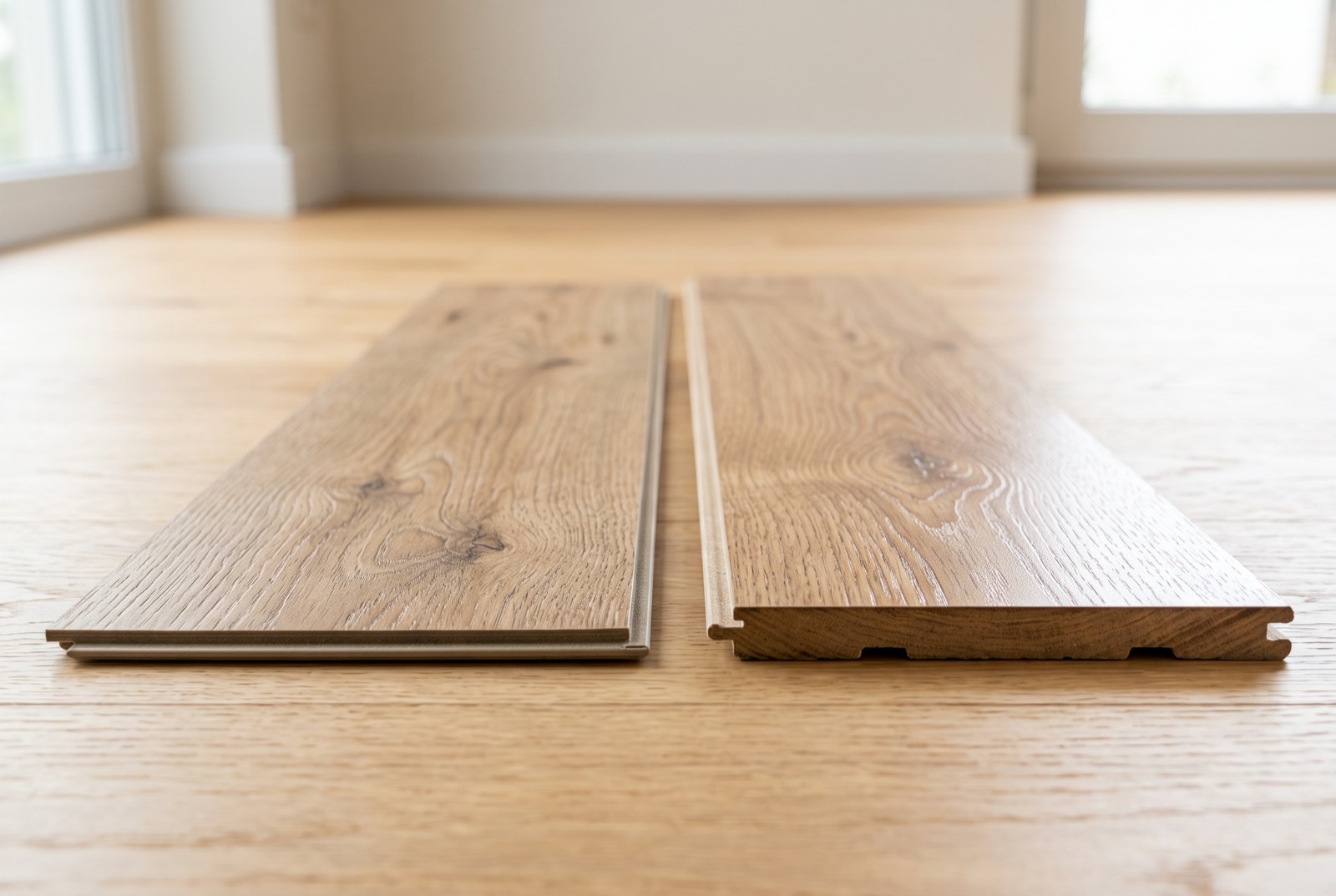
If you're deciding between vinyl vs laminate flooring for your HDB flat, here's the short answer first: for most Singapore homes, vinyl, especially SPC click vinyl, is the safer all-round pick because it's waterproof and shrugs off our humidity. Laminate looks great and often costs a little less, but its fibreboard core swells if water sits on it, so it's best kept to dry bedrooms and living rooms. The rest of this guide walks through water resistance, durability, cost per sqft, comfort underfoot, overlay vs hacking, and which floor suits which room, in plain language, no jargon.
What vinyl and laminate actually are
Both are plank or tile floors that click or stick together over your existing subfloor, but the core material is what sets them apart, and it's the core that decides how each one copes with water.
- Vinyl (SPC / LVT). SPC (stone-plastic composite) is a rigid plank with a dense mineral-and-plastic core; LVT (luxury vinyl tile) is a softer, thinner vinyl. Both are waterproof through and through, with a printed wood or stone layer and a clear wear coat on top.
- Laminate. A high-density fibreboard (HDF) core, essentially compressed wood, topped with a photographic decor layer and a hard melamine wear layer. It feels closest to real timber underfoot, but the wood-based core is its weak point around moisture.
Tiles sit in this conversation too, so we've kept them in the comparison below. They're the gold standard for wet areas but a bigger, messier job to install.
Vinyl vs laminate vs tiles: side by side
Here's the quick comparison most people are after. Treat the prices as indicative of the Singapore market in 2026, not a quotation.
| Factor | Vinyl (SPC / LVT) | Laminate | Tiles |
|---|---|---|---|
| Water resistance | Waterproof throughout | Water-resistant surface; core swells if soaked | Fully waterproof when grouted & sealed |
| Durability | Scratch & dent resistant; rigid | Hard, scratch-resistant top; edges can chip | Very hard; can crack on impact |
| Cost (supply & lay) | ~$4 – $9 / sqft | ~$3 – $7 / sqft | Higher once labour & hacking added |
| Comfort underfoot | Warm, slightly soft, quiet | Warm, firm, natural timber feel | Hard & cold underfoot |
| Install | Click overlay, fast, low mess | Click overlay, fast, low mess | Wet trade, slow, dusty if hacking |
| Lifespan | ~15 – 20+ years | ~10 – 15 years | 20+ years when laid well |
The headline takeaway: vinyl and laminate are close on cost and install effort, but vinyl pulls ahead on water resistance and lifespan, which matters a lot in a humid climate.
A few things the table can't capture. Laminate, because its top layer is a hard melamine, tends to have a crisper, more "real-timber" grain feel underfoot that some people prefer. Vinyl's wear layer is what you're really paying for, a thicker wear layer (measured in mils or microns) resists scratches and scuffs better and is worth specifying if you have a busy household. And both are far quieter and warmer to walk on than tiles, which is a daily comfort that's easy to underrate until you've lived with a hard tiled floor in the bedroom.
Moisture and humidity: the deciding factor in Singapore
This is where the choice is usually made. Singapore is humid year-round, mopping is a weekly habit, and the occasional spill or aircon drip is a fact of life. That environment is unkind to anything wood-based.
Vinyl is moisture-stable all the way through, so a spill wiped up promptly does no harm and the planks don't react to ambient humidity. Laminate's HDF core, by contrast, behaves like wood: leave water pooling at a seam and the edges can swell, lift and never fully recover. With a proper moisture barrier underneath and sensible care, laminate is perfectly liveable in dry rooms, but it asks for more discipline than vinyl does.
For genuinely wet zones, neither overlay product is the right tool. Bathrooms and similar areas should stay on tiles with proper waterproofing. See our guide to HDB bathroom waterproofing for why the membrane underneath matters as much as the tile on top.
Which floor suits which room
You don't have to use one material everywhere. A common, sensible mix in HDB flats:
- Living & dining: vinyl or laminate both work well; vinyl if you want zero worry about spills near the dining table.
- Bedrooms: dry, low-traffic, lower spill risk, a great home for laminate if you love the timber feel, or vinyl for consistency.
- Kitchen: vinyl. It tolerates splashes and dropped pans far better than laminate.
- Bathroom & service yard: tiles with waterproofing, not laminate, and not standard overlay vinyl.
- Homes with kids or pets: SPC vinyl, for its scratch and dent resistance and easy clean-up.
Overlay vs hacking: the install decision
Most HDB flooring upgrades today are done as an overlay: the new vinyl or laminate is clicked down directly over your existing tiles, with an underlay where needed. This is the big practical advantage of both materials over a fresh tile job.
Overlay (most common)
- Fast. A typical flat can be done in a day or two.
- Low mess: no hacking dust, no debris removal, no chute fees.
- Cheaper, because you skip demolition and disposal labour.
- Floor level rises a few millimetres, so door bottoms sometimes need trimming.
Hacking (when it's needed)
- Existing tiles are loose, hollow-sounding, drummy or uneven.
- You're switching to new tiles, or want to keep the original floor height.
- Adds dust, time and cost, and HDB has rules on hacking works.
If you're hacking or doing larger renovation works, check the current rules and what needs a permit on the official HDB website before you start. We cover the wider budget picture in our HDB renovation cost guide.
What it costs in an HDB flat
Flooring is usually priced per square foot, supply-and-lay, with a minimum job size. As an indicative 2026 guide:
- SPC / LVT vinyl: roughly $4 – $9 per sqft, depending on plank thickness, wear layer and brand.
- Laminate: roughly $3 – $7 per sqft, with thicker, AC-rated boards at the top of the range.
- Add-ons: underlay, skirting, door trimming and removal of old flooring (if hacking) all add to the total.
For a whole flat, the gap between vinyl and laminate is often smaller than people expect once labour is included, which is why the moisture and durability advantages of vinyl frequently tip the decision. The cheapest quote isn't always the best value either: a very thin plank with a paper-thin wear layer can look identical on day one but show wear within a couple of years in a high-traffic corridor. It's usually worth paying a little more for a thicker board and a reputable supplier you can go back to for matching planks later.
So which should you choose?
Pulling it together:
- Want one floor that handles everything with least worry? Go SPC vinyl.
- Love the look and feel of real timber and keep your rooms dry? Laminate in bedrooms and living areas is a fine choice.
- Wet area? Tiles with proper waterproofing, every time.
There's no single "best" floor, only the best fit for the room, your budget and how you live. A quick site visit usually settles it faster than any amount of online comparison.
Getting it done by RK E&C
RK E&C is a Singapore-registered flooring and renovation company (UEN 202442767D) laying vinyl, laminate and tiles in HDB flats and condos island-wide, as overlay or with hacking, alongside our wider renovation and flooring services. We assess your existing floor, recommend the right material per room, and give a fixed price per sqft before we start.
Send us your floor plan or a few photos and your postal code, and we'll quote you, usually the same day.
Ready to lay new floors?
Send us photos or your floor plan and your postal code. Fixed price per sqft, overlay or hacking, island-wide.
Prices are indicative of the Singapore market in 2026 and not a quotation. Confirm a fixed price with your provider before work begins.